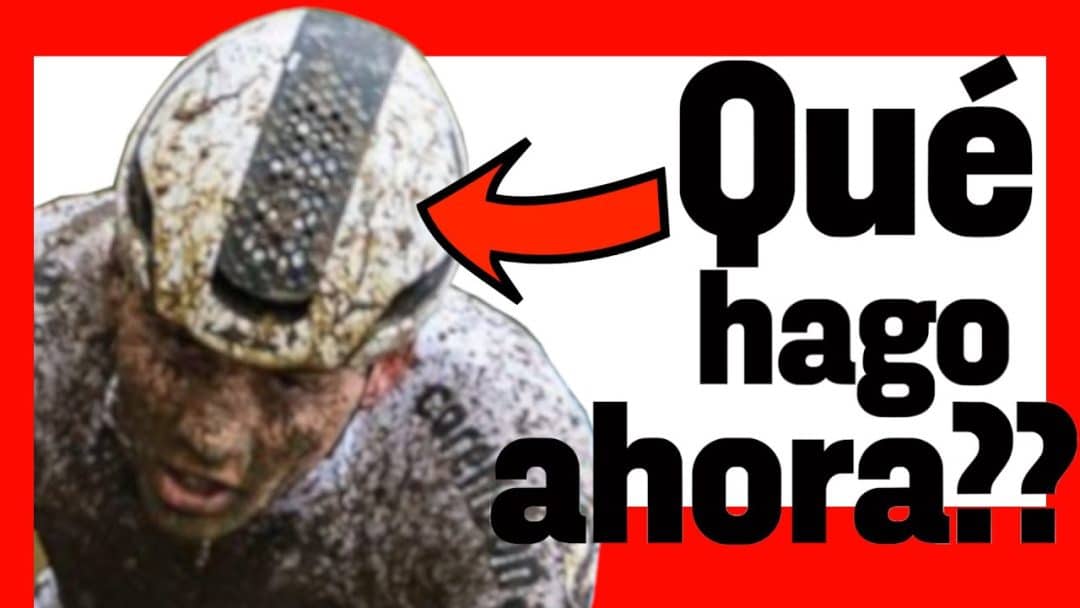
How to CARE for and CLEAN your bike HELMET
This is a guide to caring for cycling HELMETS, whether ROAD, CITY or MOUNTAIN bike helmets. Helmets are the best protection we cyclists have, but for them to do their job perfectly and stay in top condition for longer, we need to follow some tips for their care, transport and maintenance. Here are 10 TIPS for looking after and using your bike helmet properly
1. Check your helmet after a ride
You should always do this, but especially after a mountain bike ride, pay attention to knocks from branches and bushes. It’s quite likely that an MTB helmet will get knocks and/or scratches. They don’t have to come from a crash: simply riding through narrow forest sections or trails with undergrowth can cause this damage. Obviously, a brush with a low branch shouldn’t be a reason to replace it. In fact, if there is any damage, it’s usually only cosmetic. Even so, it’s a very good idea to check it, especially if you know you’ve taken a knock, and make sure there are no cracks or dents, including in the shell. If you find any of these signs, our advice is to replace it immediately, as the structure may be damaged. 
This is exactly why mountain bike helmets differ from road helmets by having a visor. The visor protects you not only from the sun (often not even that, as visors tend to be small so they don’t block your view), but from branches and other things that could hit you in the face. Visors are designed to break and absorb all the energy of these impacts instead of it reaching the helmet itself. So if your visor breaks, don’t try to fix it at home with a makeshift repair (glue, tape, etc.); it’s better to replace it. Most visors are available as spare parts and don’t cost much.
2. Clean mud, dust or salt off the outside
Wash a bike helmet with lukewarm water and a sponge, gently wiping the outer shell to remove anything stuck to it. Never do this without softening the dirt with water first, as you’ll scratch the outer shell. Don’t use a pressure washer either, as it can easily damage the helmet.

Although it’s best to wash everything by hand, the inner pads can go in the washing machine, as can the straps if they’re removable, on a programme no hotter than 30 °C and with a pH-neutral detergent.
If they can’t be removed, a sponge and lukewarm water (with a little neutral soap) is more than enough.
Anything you then need to dry is best dried in a dry, ventilated place, out of direct sunlight if possible. Never put anything in the tumble dryer, not even the straps or pads.
3. Clean the inside with an antibacterial product or cleaning wipes
Although it’s best to wash everything by hand, the inner pads can go in the washing machine, as can the straps if they’re removable, on a programme no hotter than 30 °C. If they can’t be removed, a sponge and lukewarm water (with a little neutral soap if there are lots of sweat marks, for example) is more than enough. Anything you then need to dry is best dried in a dry, ventilated place, out of direct sunlight if possible. Never put anything in the tumble dryer, not even the straps or pads. You can also use cleaning wipes to remove small salt deposits from the helmet straps.
4. Keep your helmet away from heat sources
Store it in a dry place, away from radiators, heaters, fireplaces or direct sunlight. Both the EPS and the shell are sensitive to high temperatures, so always keep your helmet away from these heat sources.
5. Store your helmet in a suitable place after a ride
When you get home, it’s important to keep your helmet in a dedicated spot. It’s not a good idea to hang it by the straps. In the attached video you can see the metal holders we use in the Terra Bike Tours Barcelona shop to store our rental helmets, protecting their straps and the plastic neck cradle. It’s also important to look after your helmet at the coffee stop: don’t leave it on the ground, so it doesn’t get knocked, and protect it from any unnecessary impact.
6. Be careful how you transport your helmet
Take great care when carrying your bike helmet in the car or as luggage
Another of the most common mistakes that shorten a helmet’s lifespan and weaken its properties is leaving it loose in the boot. As you drive home (or to the start of the route), it bounces around the boot or the car, hitting the sides, the doors or anything else you’re carrying.
It’s also not a good idea to leave it on the parcel shelf or anywhere else in the car exposed to the sun, especially for long periods.
Bike helmets are made to withstand a certain amount of sun without their looks suffering, but in a car the windows can act like a magnifying glass, and the heat inside a closed vehicle is much higher than outside, so some plastics and the glues that hold them together can soften and lose their properties.
If you’re travelling with it, avoid squeezing it into a bag that’s packed to the brim, as any other knock could end up cracking it.
I’m mainly talking about travelling by train, bus or plane with your helmet in a suitcase or sports bag. If the bag is about to burst and someone puts another bag on top, right where your helmet is, it could give way under the pressure and break. It’s best to pack it carefully, wrapped in some clothes to cushion any knocks.
7. Look after your helmet’s buckle and straps
Bike helmet buckles are almost always a plastic clip. It’s worth checking that it’s in good condition: the prongs shouldn’t be bent, and there shouldn’t be any cracks or colour changes that suggest it’s deformed.
8. Action cameras are better on the bike than on the helmet
Bike helmets are designed so that, in a crash, the force of the impact is spread over the whole structure, minimising internal damage. If you mount an action camera on it, in a crash it can act like a drill on the shell and the internal structure.
We strongly advise against it, since most mounts are universal, don’t take the specific shape of your helmet into account and don’t release on impact, concentrating the force at that point.
9. Wear a Buff-style under-helmet cap
It’s always a good idea to wear something under your helmet, especially on hot days, so less sweat reaches the helmet and the cap acts as a barrier between your head and the helmet. Buff makes head-shaped caps with no tails or extras that are perfect for this.
10. Replace it every 3 to 5 years
It’s recommended to replace bike helmets every 3 to 5 years. We hope these tips help your helmet last as long as possible in top condition, but you should know that its useful life is usually within this range. Check each manufacturer’s guidance, which will tell you when the helmet expires and no longer guarantees optimal protection in a crash.
WE HOPE YOU FIND OUR TIPS USEFUL. HAPPY PEDALLING, EVERYONE! Your helmet is the piece of kit that protects you most on the bike, and you should look after it as it deserves. Cleaning it after a ride, transporting it carefully and storing it properly will keep it in good shape for more years with all its properties, and that means more safety for you. At Terra Bike Tours Barcelona we recommend Relber products for washing both delicate cycling garments and helmets. These detergents are pH-neutral, hypoallergenic, locally made and eco-friendly . All sizes are available in our Barcelona shop.